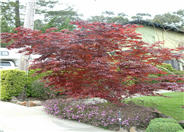
Common name:Red Japanese Maple
Botanical name:Acer palmatum 'Atropurpureum'
This Japanese Maple grows as a small, deciduous tree complete with palmate leaves that turn red and endure for the entire season.
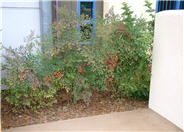
Common name:Nandina, Heavenly Bamboo
Botanical name:Nandina domestica
Nandina domestica is a graceful upright shrub that grows from 3'-6' in height. It gets its name from its bamboo-like growth habit. When thinned from the center it bears a remarkable resemblance to bamboo. It is best used in groups. It can be used in a shaded patio or out in a shrub border with full sun. An interesting feature of Heavenly Bamboo is the bronze color in the new growth when planted in full sun. It also bears clusters of white flowers in the spring.
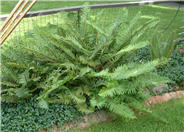
Common name:Western Sword Fern, Alaska Fern
Botanical name:Polystichum munitum
This Fern produces upright fronds, reaching 4'-5' tall in moist, cool forests in Northern California. This size is usually lower, especially without summer watering. It is great in containers or dry shade landscapes. This species is especially useful to give the illusion of lush, moist gardens where little water is actually being used. It should receive part shade to dense shade. -Monterey Bay Nursery
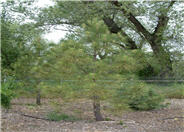
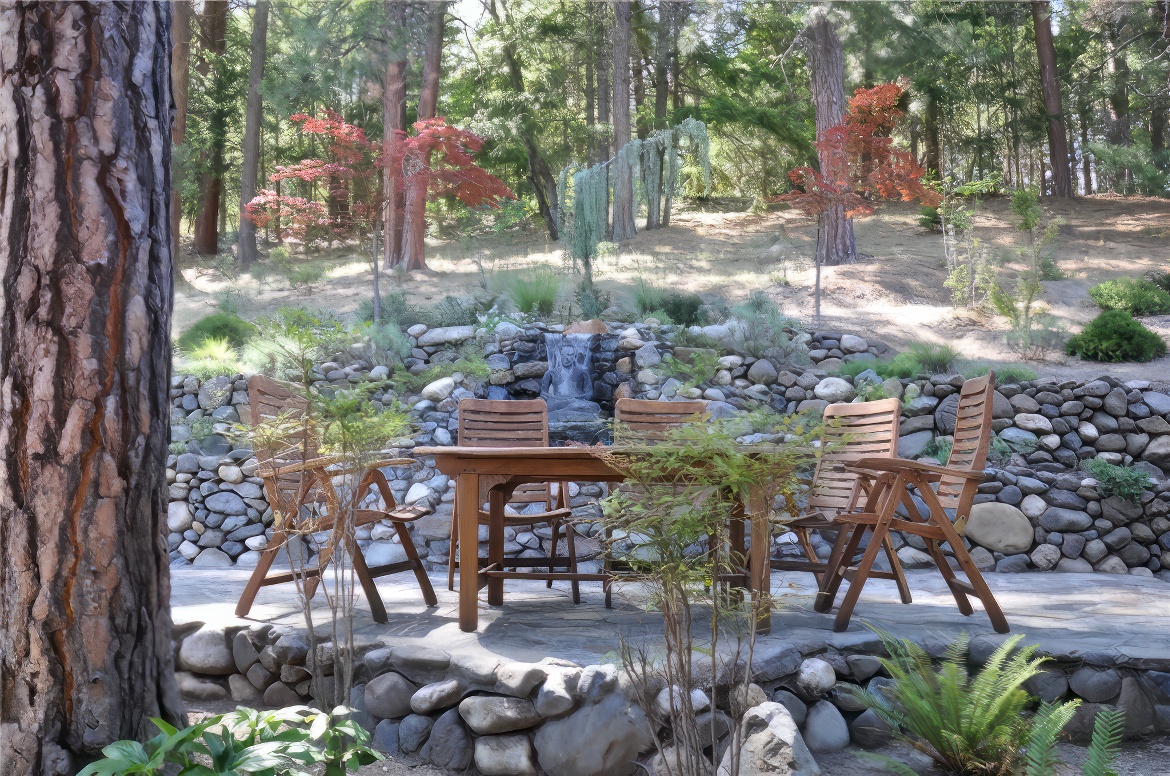
Common name:Ponderosa Pine
Botanical name:Pinus ponderosa
Defining this tree are bundles of dark, yellow green needles, which form tufts near the end of the branches. Its cones are ovular, and the bark of the young tree is a dark brown or black color. The shade of the bark changes as the tree matures, and becomes a reddish orange color with irregular scaly plates. This variety is known to grow 300 to 600 years. Pines are highly combustible plants.
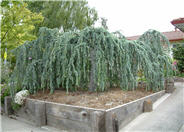
Common name:Weeping Blue Atlas Cedar
Botanical name:Cedrus atlantica 'Glauca Pendula'
This large, slow-growing conifer exhibits weeping growth form. Its golden leaves are 1" in size, and it also requires full sun in order to best develop its color. It serves as an excellent specimen or rock garden subject.
Designer: Karen Marshall
Photographer: GardenSoft
Physical weed control, including mulching, or hand removal protects the watershed from harmful chemicals.
Drip and other smart irrigation delivers water directly to roots, allowing no excess water for weeds.