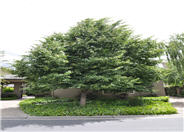
Common name:Little-Leaf Linden
Botanical name:Tilia cordata
A large deciduous tree that can reach 30'-50' tall, Littleleaf Linden creates a dense pyramid that can be used as a screen. It blooms with white fragrant flowers. It does well in urban settings. Its cultivars are budded onto the understocks of the seedlings. Should the native soil be of a clay-like nature, then plant the tree high so as to allow for drainage. They combine well with bulbs, azaleas, Japanese Holly, and Burkwood viburnum.
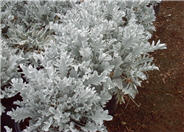
Common name:Compact Dusty Miller
Botanical name:Centaurea cineraria
This perennial plant won't grow more than 1' tall and has large, silvery white leaves with blue, purple, or yellow flowers that bloom in summer.
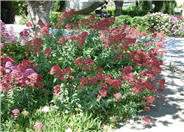
Common name:Jupiter's Beard, Red Valerian
Botanical name:Centranthus ruber
This perennial groundcover will grow 1'-3' high and has medium-size blue/green leaves with red, pink, or white flowers that bloom in the summer.
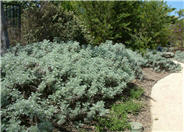
Common name:Silver Wormwood
Botanical name:Artemisia arborescens
Silver wormwood is a fast growing shrub to 6' tall by 8' wide. Soft, silvery foliage is a good contrast to the dull yellow flowers produced in spring. It is tolerant of a wide range of climates and soil conditons although it is a little cold tolerant to 25 degrees F.
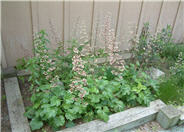
Common name:White Cloud Coral Bells
Botanical name:Heuchera sanguinea 'White Cloud'
Tufts of round, 1/2" leaves with scalloped edges accent this plant. It also produces wiry stems to 18" tall with open clusters of white, bell-shaped flowers.
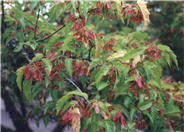
Common name:Amur Maple
Botanical name:Acer ginnala
This plant is a broad-crowned tree with attractive foliage. The small medium green, deeply lobed leaves turn brillant orange-red to wine-red in fall. Small panicles of very fragrant, creamy white flowers emerge in the spring. A. ginnala can be grown as either a single or multi-stemmed tree. Its irregular growth habit creates an interesting silhouette. It will become chlorotic if planted in alkaline soils. It does best in full sun.
-Fort Collins Nursery
Photographer: GardenSoft
Incorporate compost 6" into your soil to retain water, reduce compaction, feed earthworms, and provide valuable nutrients to your plants.
Attract, or buy beneficial insects such as ladybugs and lacewings to control pest outbreaks in your garden.